
In the years when the Afghan state was trying to stand on its own feet, there was a quiet, almost sensible choice that kept getting made—until it became a trap.
When things were hard, when districts started to wobble, when a checkpoint collapsed or a road went unsafe, you didn’t send the unit that might hold the line. You sent the unit that would. You sent the best.
Over time, that instinct hardened into a system.
Afghan Special Operations commandos were trained, equipped, and led to a standard that regular units couldn’t match. They could plan, move, coordinate, and fight in ways that looked like a modern military. They could take a mission at night, in bad terrain, under pressure, and still come back with something to show for it. They became the dependable answer in an environment where dependability was rare.
And because they were dependable, they were asked to do more and more and more.
But the story doesn’t start with overuse. It starts earlier, with how “better” gets built in the first place.
As the Afghan security forces tried to scale capability, they created (and expanded) elite units that were better trained, better led, and more reliable in combat than conventional units.
They were staffed by pulling the best people out of regular units: the strongest NCOs, the most capable junior leaders, the people with initiative, discipline, and follow-through.
This is known as the selection – you concentrate talent into an elite group by draining it from everywhere else. It feels like meritocracy. It feels like upgrading. It feels like you’re investing in excellence.
And in the short term, you are.
But every time you pull the best leadership potential out of a conventional unit, you leave behind a slightly weaker unit. You removed the sergeant who actually enforced standards. You removed the corporal everyone listened to. You removed the young officer who could get people to move when they were tired and scared. You removed the person who could hold a shaky position together because they knew when to be firm, when to bend, and how to keep morale from collapsing.
Multiply that by years.
Now imagine you’re an Afghan brigade commander trying to hold territory with units that, increasingly, have less internal leadership, less confidence, and less ability to execute without close supervision. Some units will still fight. Some will fight hard. But the baseline gets lower. More things go wrong. More emergencies happen. More positions become fragile.
So what do you do?
You call the commandos.
That’s the destruction part, and it isn’t called “destruction” because the commandos were bad. It’s called destruction because the system consumes them. They become the “fix.” The response. The insurance policy. The only tool that reliably works.
The commandos weren’t just used for deliberate raids. They were used to reinforce collapsing fronts, retake lost ground, rescue surrounded units, and plug gaps that should have been handled by conventional forces. They were pushed from one crisis to the next. The operational tempo stays high, then higher. Rest becomes a luxury. Training cycles get interrupted. Units are reorganized on the fly. The same leaders are always in motion.
Even if a commando unit remains tactically excellent, the strain compounds. The casualties hit harder because elite teams are small and experience is concentrated. Losing one capable squad leader isn’t like losing one interchangeable headcount—it’s losing a node in the network that makes the whole team function. Fatigue accumulates. Decision quality erodes. Trust frays. People burn out. Some leave. Some stop volunteering for the extra effort that used to be taken for granted.
And here’s the twist: as the elite force degrades, commanders rely on it even more, because the conventional force is weaker than ever. The more you use the elites, the more you need the elites.
That’s the cycle.
t creates a powerful illusion from the outside. Advisors, senior leaders, visiting delegations—everyone naturally gravitates to the places where things work. They partner with the units that can coordinate. They spend time with the people who can brief clearly and execute reliably. They see competence, professionalism, and bravery. And they’re not wrong about what they’re seeing.
They’re wrong about what it means.
Because it’s easy to look at the part of the system that still performs and assume it represents the whole. It’s easy to believe the force is improving because the best unit looks better than last year. It’s easy to tell yourself that if things get shaky, there’s always a capable group to stabilize it—because there has been, every time so far.
That’s why it’s a bias: the success of the elite unit biases judgment about the health of the larger system. The elite unit keeps producing proof-of-life for the overall project, while the underlying structure is quietly becoming more brittle.
Eventually, the system reaches a point where resilience is gone. If the “regular” units can’t hold, and the elite units are exhausted, and the entire model has been dependent on constant rescue missions, then the moment external support changes—air cover, logistics, intelligence, maintenance, money, morale—the collapse doesn’t need to be total to become contagious. A failure in one area creates panic. Panic creates more failures. The “hero unit” can’t be everywhere at once. And when the last backstop is overstretched, things can fall faster than outsiders expect.
The best people became the solution to everything, and being the solution to everything destroyed them and the system.
Most tech orgs have their own commandos. They’re not called that more like the “tiger team,” the “platform core,” or simply the “fix-it squad,”
When pressure spikes—missed revenue targets, reliability incidents, a regulatory deadline then the leaders reach for certainty. They pull the most capable, high-agency people into one elite squad because it’s the fastest way to get results.
That’s the selection.
But those people came from somewhere. Their old teams lose their strongest operators and informal leaders. Standards slip. More things break. More work gets escalated.
And because the elite team keeps delivering, the org learns the wrong lesson: “If it’s important, give it to them.” Soon they own their roadmap and the emergencies and the exec saves and the cross-team unblock.
That’s the destruction.
From the outside it still looks fine: things ship, fires get put out. But the organization is becoming fragile: capability is concentrating, dependency is growing, and the same few future leaders are running in permanent sprint mode until they burn out or leave.
The PM lesson is simple: don’t confuse heroics with health.
As PMs, we love outcomes. We’re trained to value shipping. We get rewarded for making the impossible happen.
Selection–destruction bias is what happens when an organization builds a strategy on that instinct: keep asking the same best people to be the answer.
It works until it breaks.
If you’re leading or influencing prioritization, you’re in the blast radius. You may not control staffing, but you often control load.
You can see the pattern forming before most leaders do, because you’re the one watching the same names pop up in every emergency channel and every critical initiative.
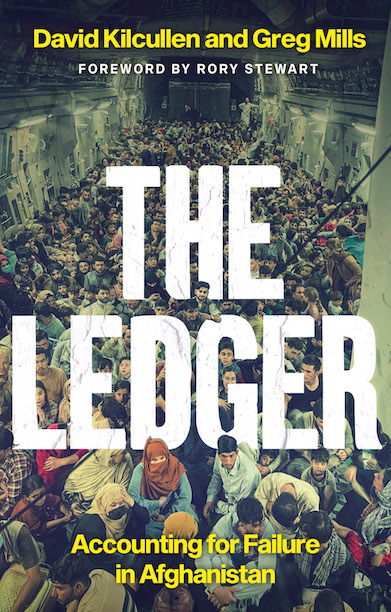
This post was inspired by the insight from “The Ledger – accounting for failure in Afghanistan” by David Kilcullen and Greg Mills.